
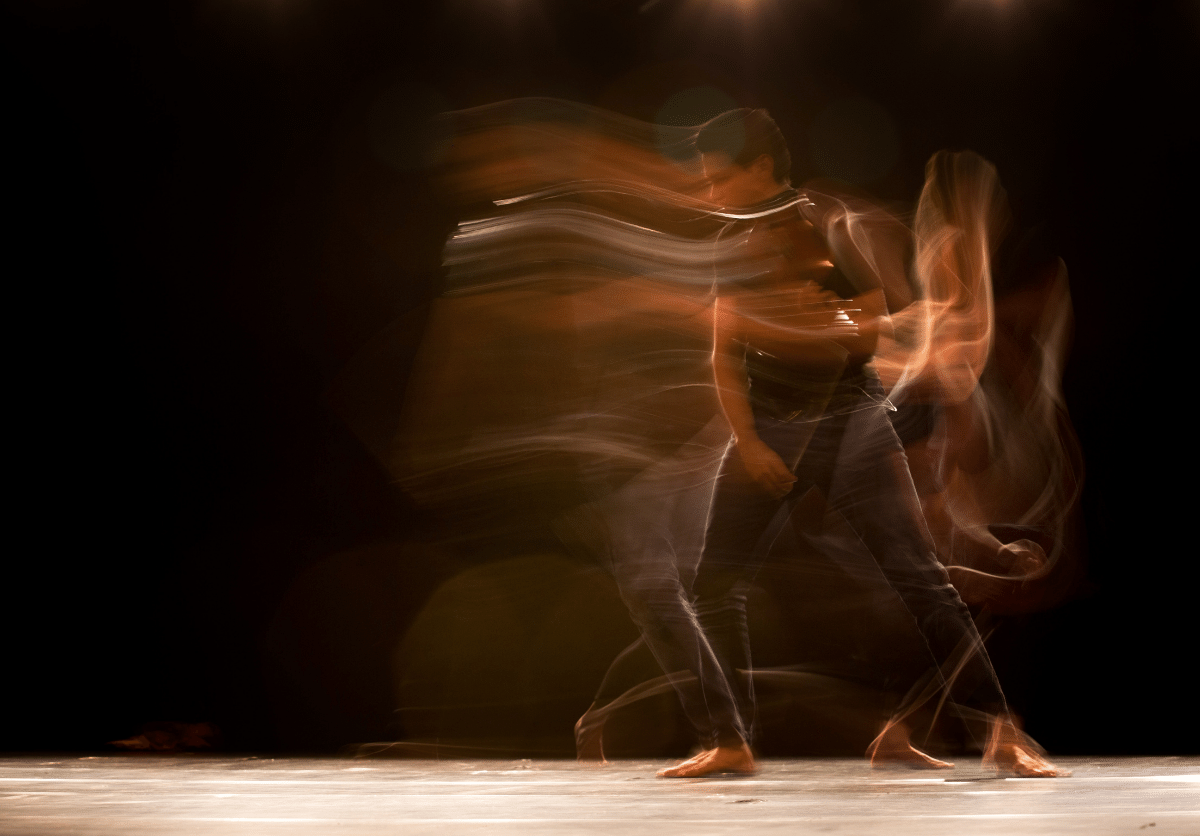
Music can be understood by everyone not using a single word.
All groups of people around the world make, appreciate, and respond to it, yet it is a very much intimate companion.
Music will make you cry and cheer you up the same day, but you will still feel safe around it.
You teach it to your kids to pass down your folklore and culture heritage.
What is music ? How would you describe it ?
Hong Kong Generation Next Arts’ answer to this question ↓
To the question « What is music? », HKGNA’s video brings a width variety of answers.
- First, that the dictionary’s definition is unsatisfying to many.
« The art of arranging sounds in time so as to produce a continuous unified and evocative composition » appears to be too narrow to encompass their feelings about music.
- Second, that despite the breadth of descriptions, they all have in common the emotional charge people associate with music:
« Music is an escape from the monotony of everyday life »
« It’s where I go for inspiration, energy, refuge »
« Music makes you feel alive, it’s the language of your heart, the food of your soul »
« I don’t know how to do how to live without music, music is worship, music actually adds color to life »
« Music makes me feel free »
Music is doubtless an important aspect of identity and culture in all human societies.
What makes Music so powerful?
- Music binds us like no language does
- Music is a universal yet personal concept
- Music is a safe place to feel
- Music affects us on a biological level
Music binds us like no language does
Music’s structure is not much different from a language. A tune is only composed of sets of pitches, silences and notes. All in all, just vibrations well arranged that create a harmony. But music binds us in a way that language rarely does. Each works differently. When talking we take turns (hopefully): one person talks, another person listens, and vice versa. Therefore, language is essentially an « individualizer ».

On the opposite, music is a powerful social glue. A communication system that draws people together through many of the most important occasions in our lives. From our youngest age with lullabies, to graduations, weddings and funerals.
There is something about music that seems to bring us closer to each other and help us come together as a community.
It is no surprise that music became a management tool, used to help organize, motivate and sustain the efforts of teams (for soldiers or sailors for example), giving a common rythm to everyone.
Music is a universal yet personal concept
We’ve all heard the saying, “Where words fail, music speaks”. It refers to the fact that music is simple, evocative, capable of transmitting incredible varieties of emotions across boundaries. Is it the reason why the American poet Henry Wadsworth Longfellow claimed that “Music is the universal language of mankind” ?
Really? Is music a cultural universal concept ? If it is, which musical qualities overlap across disparate societies? If it isn’t, why does it seem so ubiquitous?
That’s the questions, scientists at Harvard addressed. The study required a major international collaboration with musicians, data scientists, psychologists, linguists, and political scientists. It spread over 5 years. You can find the study results and dedicated article here.
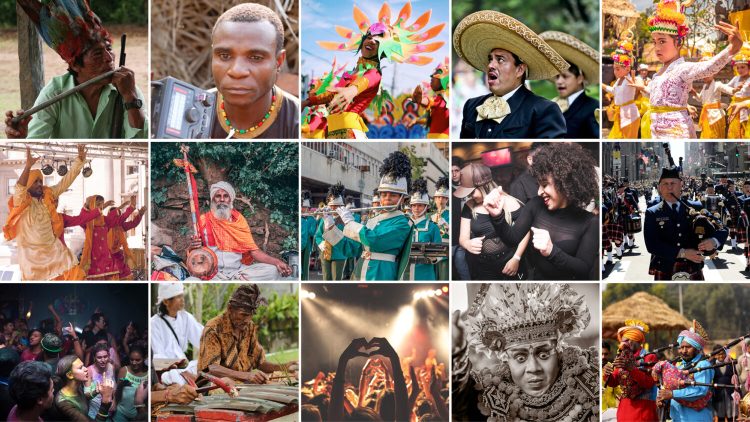
Little spoiler alert though: music does appear in every society observed.
A part of it is always associated with behaviours such as infant care, healing, dance, and love (among many others, like mourning, warfare, processions and ritual). Across the world, those songs that share behavioural functions tend to have similar musical features.
This said, any art appreciation in general is deeply personal and intimate.
We have got this French saying: « Les gouts et les couleurs ne se discutent pas » which literally means « Of tastes and colors one must not argue ».
It applies very well to music as it resonates in a way or another with the listener, evoking emotions and even sometimes memories.
Music is a safe place to feel
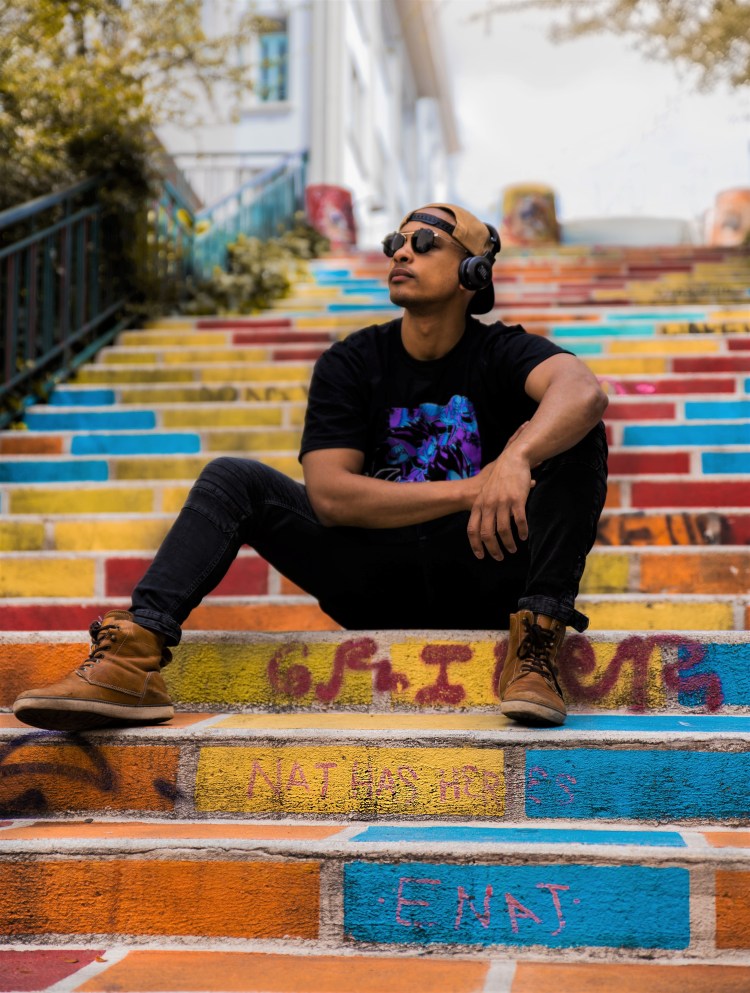
Music has this magical power. The power to make you feel an emotional experience. It can be positive or negative depending on the melody and the triads. With the major one -that we perceive as happy, or the minor one -which we feel as sadder.
A great song seems to be able to convert emotions into a shareable, perceptible sonic language. It shakes us via rhythms, harmonies, beautiful noise and lyrics. It has this incredible capacity to translate something silent and formless, something we felt once into a piece of audio we relate to.
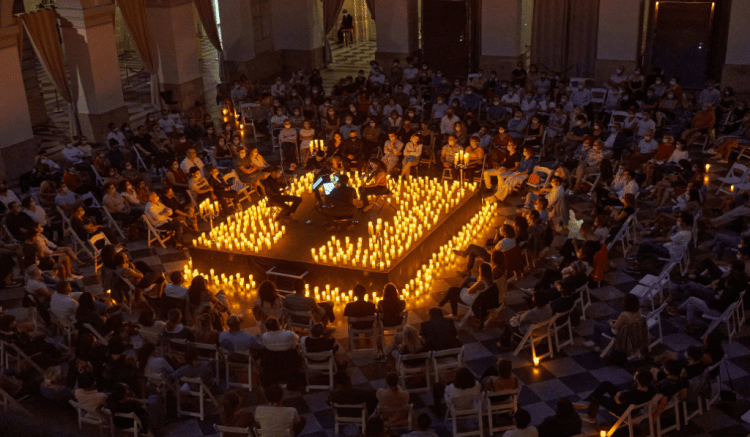
Music reconnects us with our interior feelings by convoking them. Sometimes it is so powerful that a song will reveal an emotion we did not even expect. I remember going to a Candlelight piano show in Lyon last year and being moved as I never thought I could be. I literally cried during all the show!
Those characteristics make music an extraordinary powerful and welcoming place to feel freely with no other risk than bursting into tears!
This driving power is exploited at its best in cinema. Good producers can make you feel anything they want you to feel with a careful and deliberate choice of music. And that’s the whole point of SCORE, A Film Music Documentary, unveiling the musical work that happens behind the scenes. (Find the trailer at the end of the article!)
Music affects us on a biological level
Music also affects us on the biological level.
Internally, it can affect our blood pressure, heart rate, chemical neurotransmitters and hormones.
Externally, it can give us goose bumps or spine-tingling chills, or drive us to tears.
In his excellent Ted Talk, the neuroscientist and musician Alan Harvey explains and shows live-on-stage what music does to our brain waves, and how music is more than just an entertainment.
In particular, music has an extraordinary ability to evoke memories, and allows us to remember things that have happened in the past. We now know, for example, that it can help unlock memories in people with dementia -Alzheimer’s disease.
Music is also used in the treatment of certain developmental disorders, such as autism.
Some rehabilitation therapies also tried it to improve mood and motor performance in patients who’ve suffered a stroke or had a brain injury or in conditions like Parkinson’s disease.
This fields of application is fascinating.
If like me you would like to know more about it, if music interests you, and more specifically if you would like to know what it does to our brains (apart from blowing it), you will be happy to learn that this is the subject of the Worldwide Music Conference, this April!
This unique online event taps into neurology, sociology, ethnography and anthropology to explain how music moves you and your mind! Find more info about the event and guests here.
Now, I wish you a very good day, I hope to see you around soon.
Before you leave, I’ve set up the SCORE’s trailer! See how it’s good for your ears and let me know in the comment sections if you went on with the full doc!
Meet Hollywood’s premier composers and discover the musical challenges and creative secrecy of the film score.
Thank you for reading!
This is the second article in a series written for NationsOrg. Every second week, we try to approach the subject of multiculturalism through the fields of sociology, psychology or management with one aim: taking a step back on the cultural globalization expats deal with on a daily basis.
 Allez Venez